


Olexian Evidence Platform (OEP):
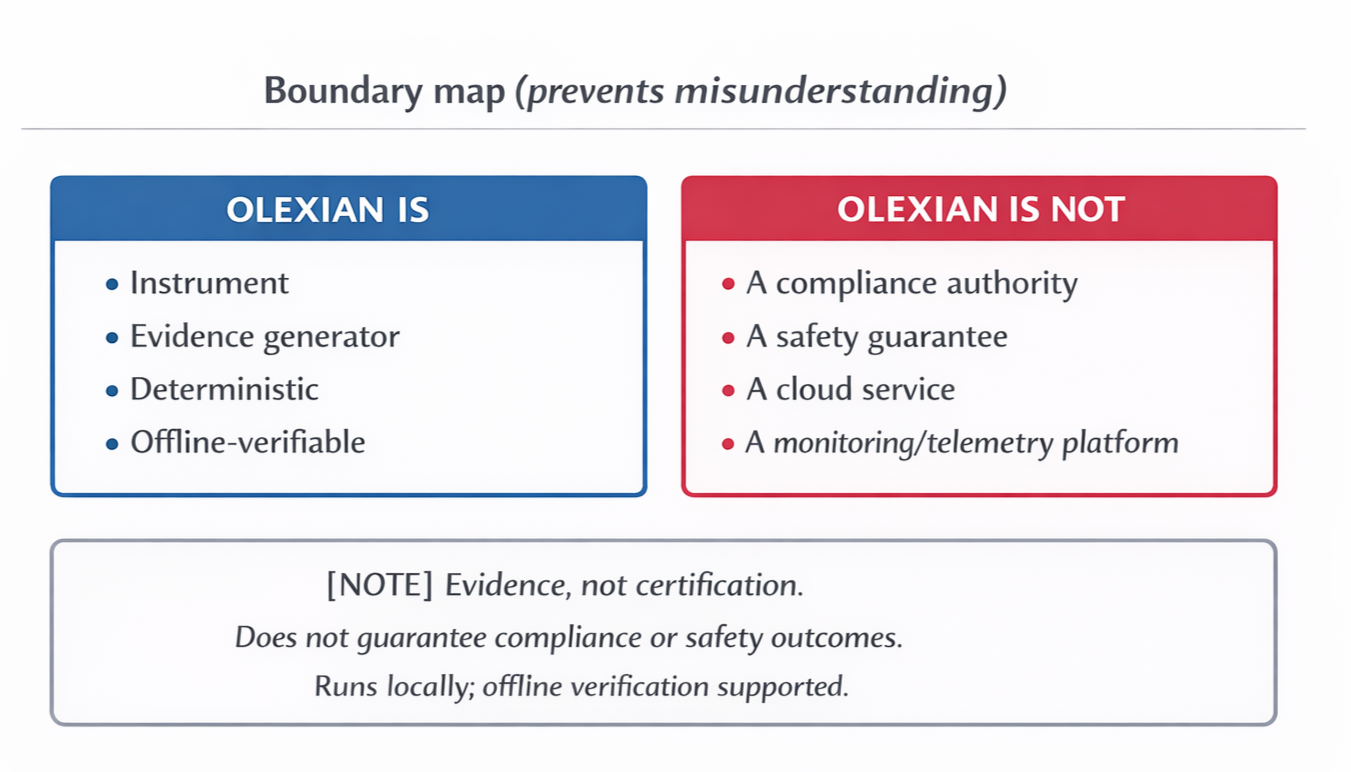
OEP is an offline-first evidence platform that produces deterministic, auditor-verifiable evidence bundles from test and analysis runs—so claims can be replayed, inspected, and validated without trusting a live service or a vendor-controlled dashboard.
Choose OEP when you need proof, not screenshots.
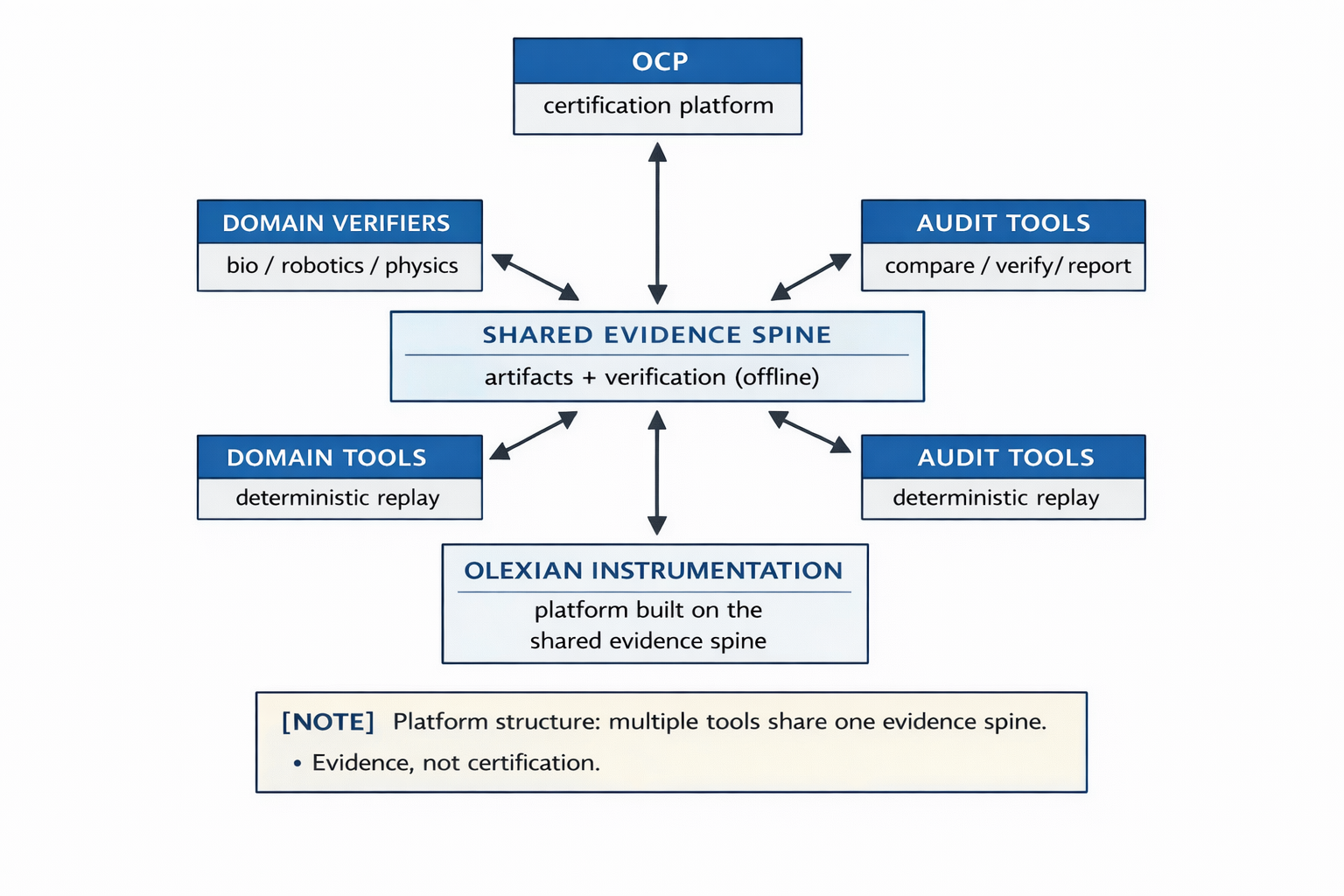
What OEP does:
OEP helps teams demonstrate validity and reproducibility of results by turning executions into sealed evidence bundles:
Deterministic replay (within a stated envelope)
Cryptographic integrity links between (inputs > outputs > manifests)
Explicit refusal on invalid, incomplete, or out-of-envelope conditions
Local-only operation by default; no data harvesting posture
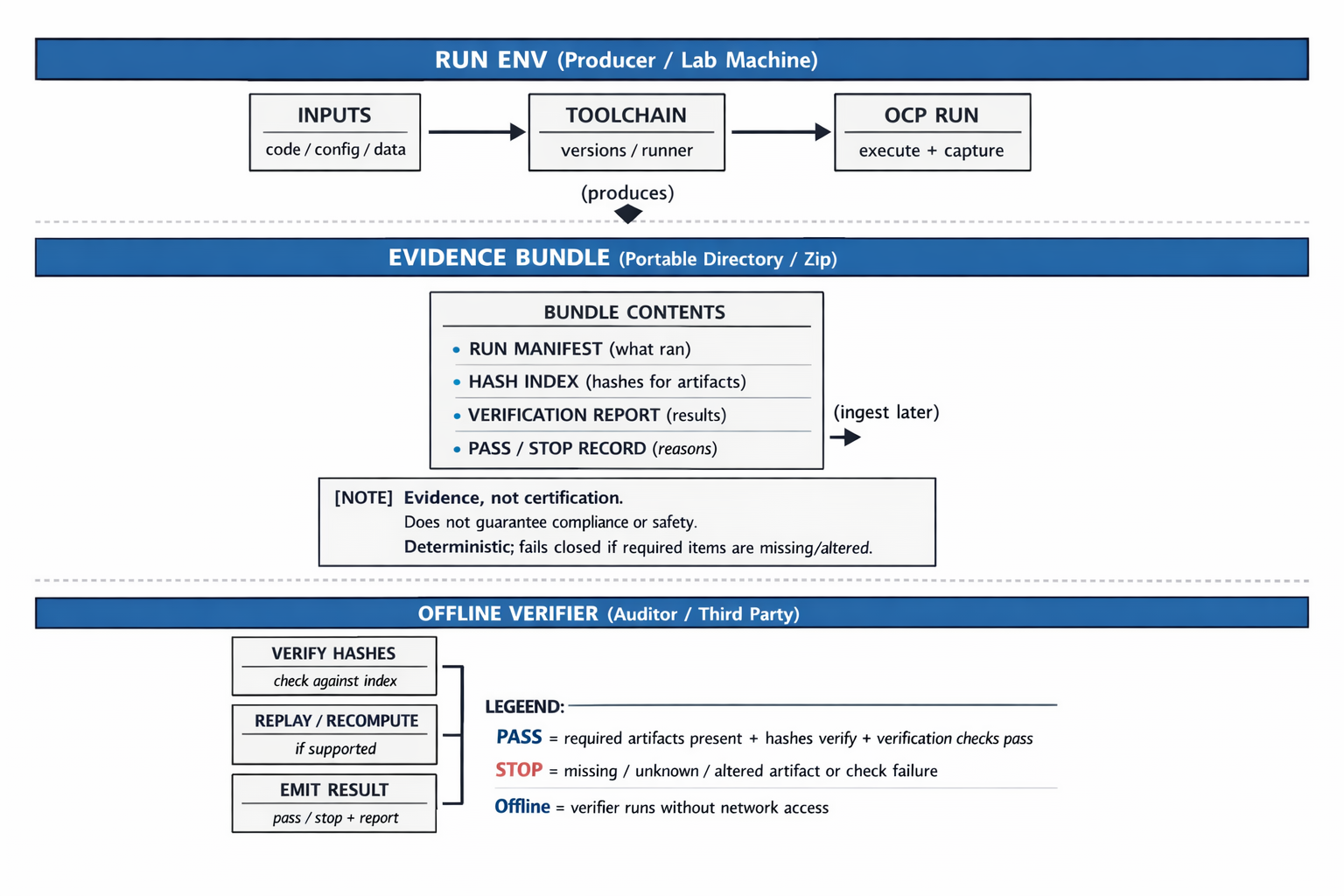
Verification outcomes
PASS — The evidence bundle is intact and can be verified offline.
REJECT — Verification refused: one or more artifacts are missing, unknown, or altered. The report includes structured failure conte
The Problem OEP Solves:
“It worked on my machine”
Results that can’t be reproduced months later
Evidence scattered across logs, screenshots, and unpinned toolchains
Hidden fallbacks that quietly change outcomes
Vendor platforms that require cloud connectivity or data export
Most “validation” in real organizations breaks down into fragile artifacts:
OEP replaces those issues with disciplined outputs: an evidence bundle that survives time, staffing changes, and scrutiny.
How OEP Works:
OEP is built on the Olexian Instrumentation model: a strict truth spine with deterministic artifact production and clear separation between authority and presentation.
At a high level:
Declare Inputs: (explicit files, explicit versions, explicit configuration).
Run Deterministically: inside the stated envelope (pinned execution rules).
Emit Artifacts: (Manifests, hashes, structured results).
Verify: With replay and checks that either PASS or REFUSE with reason codes.
Export a bundle that can be handed to auditors, partners, or internal review members.
Integration Posture:
OEP is designed to integrate into existing workflows rather than replace them.
Common Integration Points:
CI Pipelines: Run OEP verification as a gate before publishing results.
Lab Workflows: Produce bundles per test series for long-term retention.
Supplier Chains: Require vendors to ship proof packs with deliverables.
Regulatory Packets: Attach bundles as reproducibility evidence and traceability.
OEP can sit alongside your current tools, the wedge is the evidence bundle and replay discipline.